









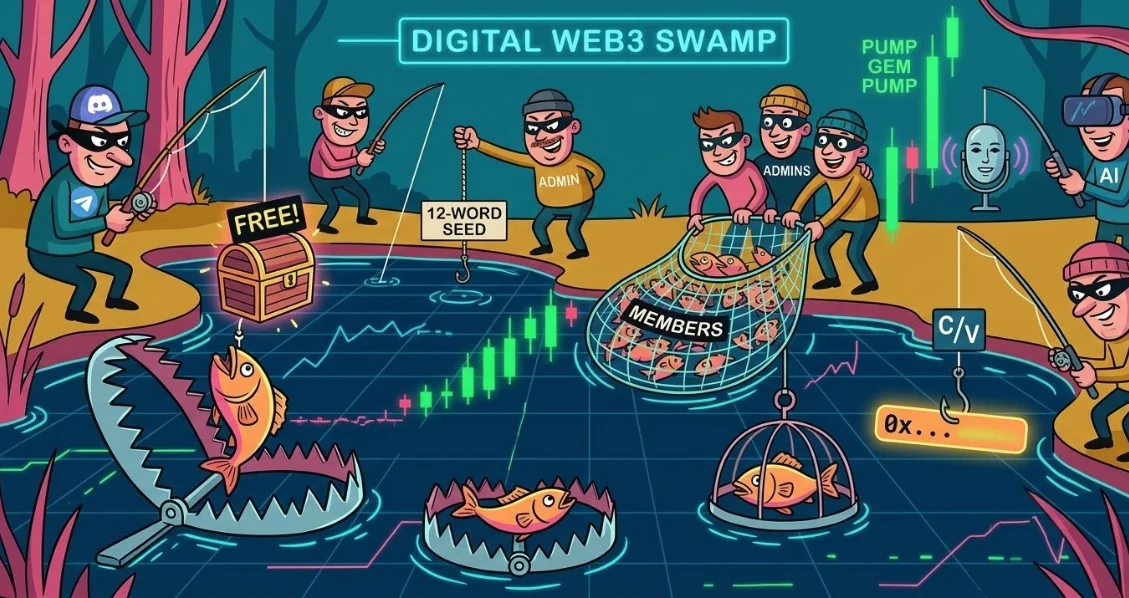
If you spend enough time in Web3 community channels, you will quickly realize that the modern cryptocurrency landscape is a digital battlefield. While institutional money flows into regulated ETFs, the trenches of Telegram and Discord remain a wild west of sophisticated fraud. Forget the obvious Nigerian Prince emails of the past. The 2025 and 2026 scam playbooks are industrialized, highly automated, and horrifyingly effective. Based on the latest on chain security reports and threat trackers, here are the top 10 crypto scams actively hunting your liquidity today.
1. Fake Airdrop "Claim" Links
-
Where it appears: Discord announcements, Telegram channels, and X replies.
-
The Trap: The promise of free money is the oldest hook in the book. You see an urgent message telling you to "claim your free token airdrop" before the window closes. The link directs you to a flawless clone of a legitimate decentralized app. Once you connect your wallet and blindly sign the transaction, it is game over.
-
The 2026 Context: Hackers are now exploiting vulnerabilities in open source libraries like React to seamlessly implant crypto drainers into trusted websites. If you are blindly signing smart contract approvals for a free meme coin, you are essentially playing Russian roulette with your net worth.
2. Wallet "Drainer" Bots
-
Where it appears: Telegram bots and Discord direct messages.
-
The Trap: You receive a message instructing you to "verify your wallet" to access an exclusive whitelist or premium channel. The provided bot prompts a contract approval request. The moment you sign it, scammers gain unlimited token spending permissions, emptying your funds in seconds.
-
The 2026 Context: The Drainer as a Service industry is booming. Syndicates like the Rublevka Team and the notorious Inferno Drainer rent out sophisticated malware to low level scammers for a cut of the profits. These tools now feature "Honeypot" modes that fake incoming token receipts to lower your guard before initiating the fatal drain.
3. Fake Support Moderators
-
Where it appears: Discord NFT and DeFi servers.
-
The Trap: You open a support ticket because your transaction failed. Almost instantly, a helpful "support mod" sends you a direct message. They provide a verification link that leads to a phishing site designed to steal your seed phrase or login credentials.
-
The 2026 Context: Scammers have evolved beyond basic human impersonation. They are now deploying fake Collab.Land verification bots that look identical to the real ones, right down to the interface. Always check for the official "Verified App" checkmark, and remember that real Web3 support will never DM you first.
4. Pump and Dump Telegram Groups
-
Where it appears: Anonymous trading channels.
-
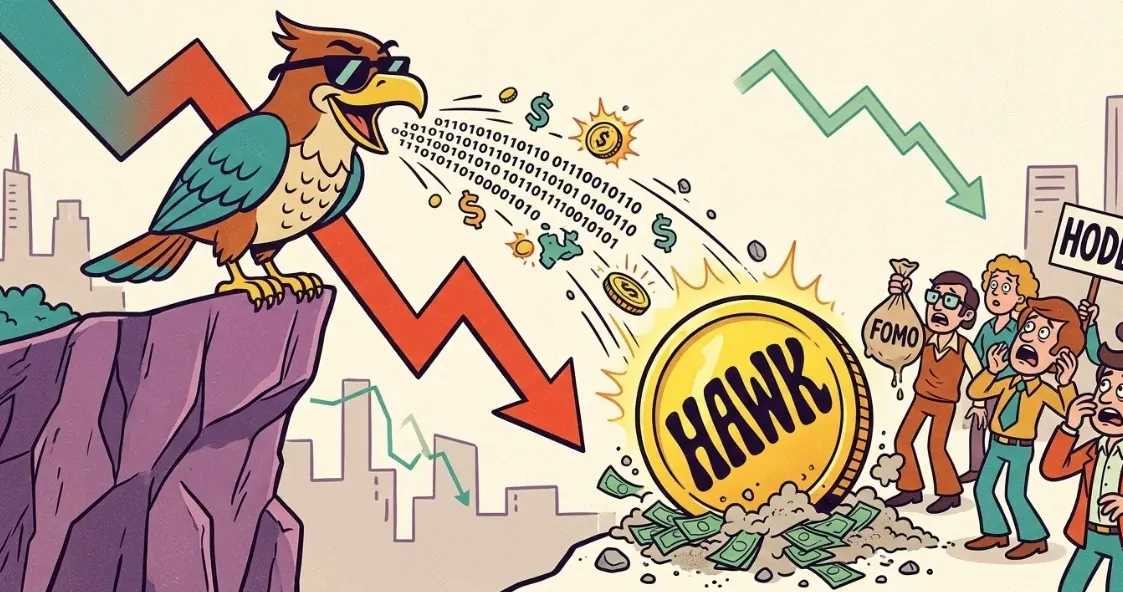
The Trap: "Next Solana killer." "1000x GEM." "Insider launch." The admins of these massive Telegram groups hype up an obscure micro cap token, triggering a buying frenzy among thousands of members. What they do not mention is that they bought the supply hours ago.
-
The Betting Insight: Trying to front run a Telegram pump and dump is mathematically identical to catching a falling knife. The admins execute their sell orders the exact millisecond the signal goes live. You are not the insider in this scenario. You are the exit liquidity.
5. Honeypot Tokens
-
Where it appears: Telegram trading channels and automated DexScreener alerts.
-
The Trap: You spot a token rocketing up the charts with massive green candles. Fear of missing out kicks in, and you execute a buy order. The transaction goes through perfectly. An hour later, you try to take profits, but the decentralized exchange throws an error.
-
The Mechanics: The smart contract is maliciously coded to block all sell orders from retail wallets. Only the developer wallet has the permission to sell. You can check in any time you like, but your liquidity can never leave. Always run new contract addresses through automated honeypot scanners before deploying capital.
6. "Task Platform" Crypto Jobs
-
Where it appears: Telegram recruitment groups.
-
The Trap: You are offered a seemingly easy gig rating crypto apps or boosting exchange rankings. After completing a few tasks, the "employer" demands that you deposit a specific amount of USDT to unlock higher paying tiers.
-
The Reality: This is a localized, fast paced version of the infamous pig butchering scam. The platform is an illusion. The moment you deposit real stablecoins, your account is frozen, the employer deletes their Telegram account, and your deposit funds their next vacation.
7. Fake Crypto Trading Groups
-
Where it appears: Influencer funnels and Telegram VIP channels.
-
The Trap: You are invited to an exclusive VIP trading club boasting "60% profit in 60 seconds." The group is filled with screenshots of massive gains and testimonials from supposedly wealthy traders. To participate, you must deposit funds onto their proprietary trading platform.
-
The 2026 Context: These platforms are sophisticated simulations. The charts are fake, the trades are fabricated, and the other members are simply bots conversing with each other. Once you wire your Bitcoin to the platform, it goes directly to a criminal syndicate's cold storage.
8. Giveaway and Doubling Scams
-
Where it appears: Discord servers and hijacked YouTube livestreams.
-
The Trap: "Send 0.1 BTC, and we will send 0.2 BTC back." It is baffling that this still works, but greed often overrides logic. Scammers hijack verified social media accounts or run deepfake videos of tech billionaires promising to double any cryptocurrency sent to a specific address.
-
The Harsh Truth: Nobody on the internet wants to double your money out of the goodness of their heart. If an offer violates the basic laws of economics, it is a trap.
9. Address Poisoning Scams
-
Where it appears: On chain transaction histories and Telegram wallet groups.
-
The Trap: This is currently the most devastating silent killer in Web3. A scammer sends a dust transaction (a tiny fraction of a cent) to your wallet from an address that visually mimics one you frequently use. They rely on the fact that you will eventually copy and paste this poisoned address from your transaction history for a future transfer.
-
The 2026 Context: Following the Ethereum Fusaka upgrade, network fees plummeted, making large scale address poisoning incredibly cheap for attackers. In early 2026 alone, single victims have lost upward of $12 million by simply copying the wrong address from their history. Never copy addresses from your transaction log. Always verify the full alphanumeric string.
10. AI Deepfake Crypto Influencers
-
Where it appears: Telegram groups and live video calls.
-
The Trap: Scammers are no longer just using text. They are utilizing real time AI voice clones and deepfake video technology to impersonate project founders, influencers, or venture capitalists. They will literally hop on a video call with you to promote a fake presale or exclusive investment opportunity.
-
The Betting Insight: We have officially entered the era of zero trust. If a prominent crypto figure suddenly contacts you with a time sensitive investment, demand cryptographic proof of their identity. AI can fake a face and a voice, but it cannot fake a verified on chain digital signature.
Stay Vigilant!
Crypto scam operations are no longer run by lone wolves in basements. They are industrialized networks utilizing AI tools, Drainer as a Service subscriptions, and cheap on chain exploits. Survive the 2026 bull market by treating every direct message, unverified link, and "exclusive opportunity" as a highly sophisticated threat to your portfolio.