





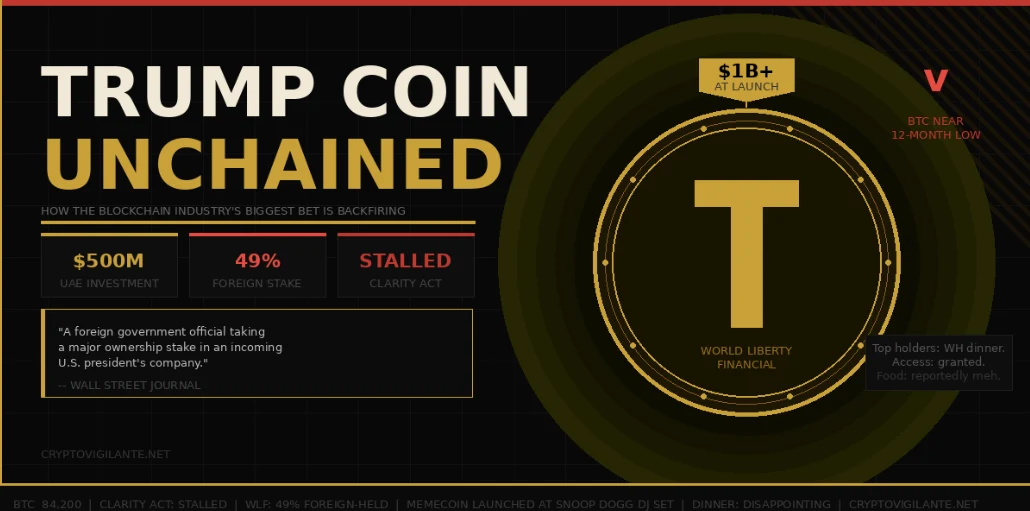
How the blockchain industry's biggest political bet is starting to look a lot like a rug pull
Picture this: Washington D.C., January 2025. The blockchain industry's finest have swapped their hoodies for tuxedos, clinking champagne flutes in a gilded ballroom, celebrating the inauguration of the first self-declared "crypto president." The vibes were immaculate. The optimism was stratospheric. Then someone checked their phone.
Trump had just launched a memecoin. By the time Snoop dropped his last track, it had crossed a billion dollars in market cap.
Subtle? Naah...
The Brand Extends to the Blockchain
To anyone who has followed Trump's career, this was less a surprise and more a logical endpoint. The man has slapped his name on casinos, steaks, a now-defunct "university," and bottled water. Crypto was simply the next frontier.
The quality of the product was a distraction from the nature of the arrangement. Ethics watchdogs began raising alarms that Trump's blockchain ventures were functioning less like business opportunities and more like a velvet rope with a very specific cover charge. During his first term, concerns centred on foreign dignitaries booking rooms at Trump hotels, an arrangement that introduced the word "emoluments" to the dinner table conversation of millions of Americans. This time, anyone with a crypto wallet and enough capital could effectively wire the president of the United States a seven-figure sum and potentially get something in return.
The top holders of the Trump memecoin were invited to a private dinner at the White House last May. Multiple attendees reportedly complained about the food. When the access you purchased with your digital fortune gets you dry chicken and awkward small talk, that is a yield worth tracking.
Then Came the Wall Street Journal
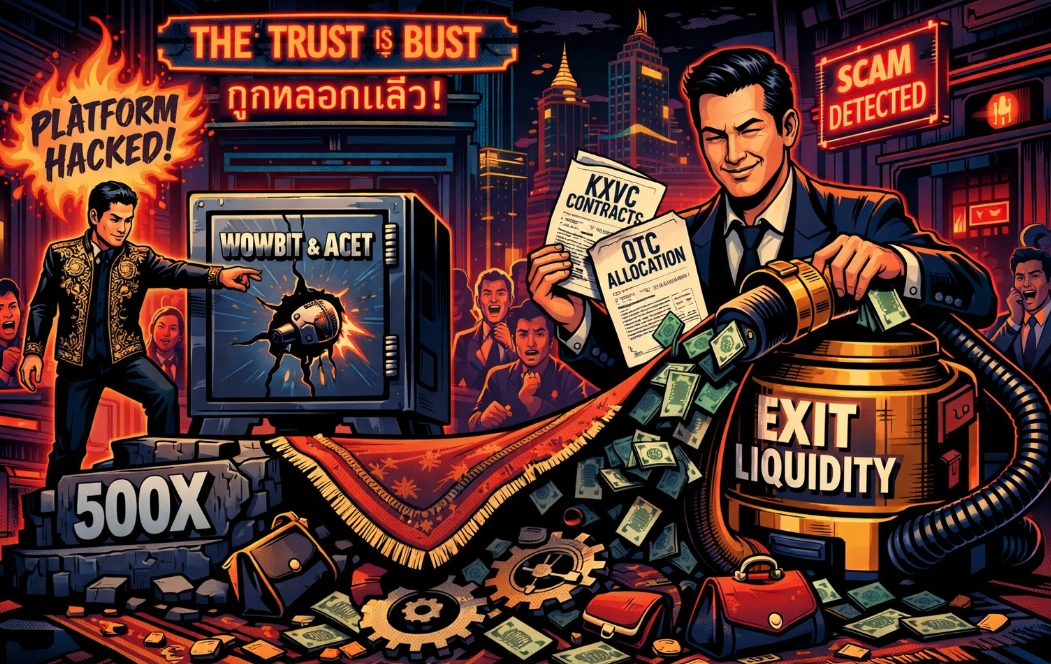
Those early concerns, significant as they were, now read like a warm-up act. In a report that landed like a thunderclap on a Saturday night, the Wall Street Journal revealed that two lieutenants to a member of the Abu Dhabi royal family had signed a contract to funnel $500 million into World Liberty Financial, the Trump family's crypto platform, in exchange for a 49% ownership stake. The timing: days before Trump's inauguration.
The Journal called it plainly: a foreign government official taking a major ownership stake in an incoming U.S. president's company. That is not a precedent. That is not a grey area. That is a sentence that has never been written before in the context of American politics, and not in a good way.
Months after that deal was signed, the Trump administration approved UAE access to advanced American semiconductor technology, overriding widespread national security concerns. A World Liberty spokesperson has stated the deal had no connection to the chip decision. That disclaimer is doing an enormous amount of heavy lifting.
Is Trump Actually Bad for Crypto?
Here is where it gets genuinely complicated, and worth thinking through carefully if you have any skin in this market.
The industry spent hundreds of millions of dollars backing Trump in the 2024 election cycle. It was the largest coordinated political investment crypto had ever made. The expected return: clear regulatory frameworks, an end to enforcement-first oversight, and the kind of legitimacy that comes from having a president who talks about Bitcoin at rallies.
Some of that has materialised. Summits have been hosted. Czars have been appointed. The tone from Washington on crypto shifted overnight.
But the Clarity Act, the landmark legislation that was supposed to finally define how digital assets are regulated in the United States, is now stalled in the Senate. Democrats are pushing for ethics provisions that would bar the president from profiting off crypto holdings while in office. Given the current headlines, that push is only going to gather momentum. The bill that the industry spent years lobbying for is now caught in the crossfire of the industry's own biggest political bet.
Meanwhile, Bitcoin is trading near its lowest price in twelve months. Retail participation is falling. The broader crypto market, which soared on post-election euphoria, has given back a significant portion of those gains. When crypto becomes synonymous in the public mind with political scandal and insider deals, the new money does not flow in. It stays on the sideline.
This is the core tension: the industry wanted a friend in the White House. What it got was a partner with his own agenda and a very different definition of what the relationship was for.
The Uncomfortable Truth About Picking Powerful Friends
Every major asset class that has sought political protection has eventually learned the same lesson. The protection is real, right up until the protector's interests diverge from yours. At that point, you are not a priority. You are a vehicle.
Crypto's pitch to the mainstream has always been decentralisation: the idea that no single actor, no government, no institution could capture or corrupt the network. The blockchain does not care who is president. The ledger is immutable. The code is the law.
That pitch gets harder to deliver when the industry's most visible political patron is at the centre of a foreign investment scandal, when the flagship legislation is stalled over ethics concerns tied directly to his family's holdings, and when the dinner guests are complaining about the catering.
The blockchain industry made a calculated bet in 2024. The calculation was not wrong on its face. What the industry may have underestimated is how completely Trump's personal brand absorbs everything it touches. For better or worse, in the public eye, crypto is now a Trump product. That association will keep some capital away that would otherwise have arrived. Be careful what you wish for. And maybe bring your own food or something.