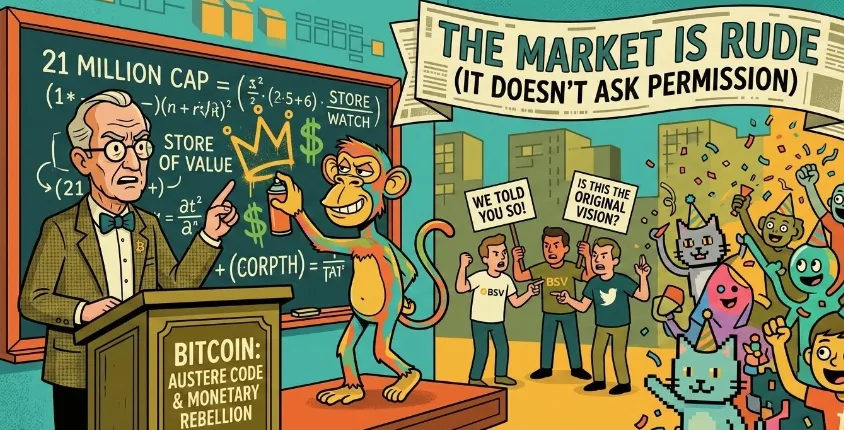










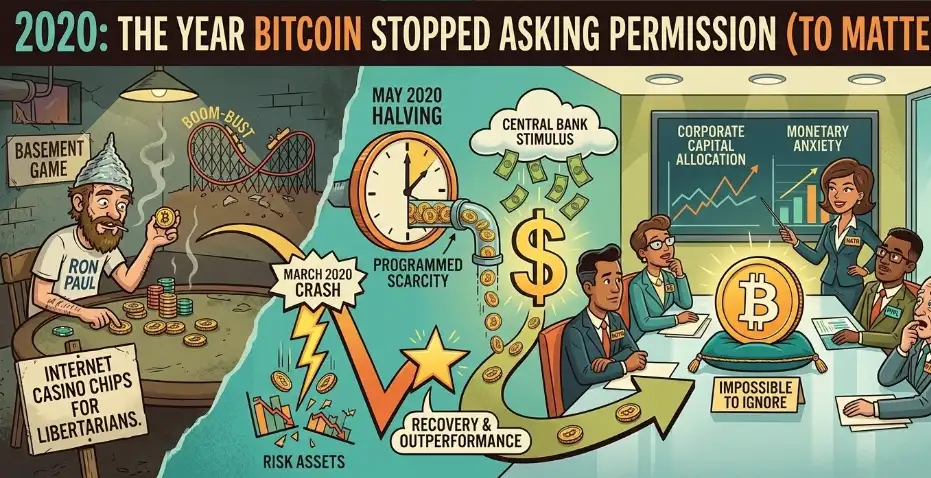
If 2020 proved anything, it was that Bitcoin no longer needed to ask permission to matter. The year began with the asset still carrying the baggage of its previous boom-and-bust cycle and ended with institutions, public companies, and macro investors suddenly treating it as something more serious than internet casino chips for libertarians. That shift did not happen because Bitcoin became less volatile or less weird. It happened because the world itself became unstable in ways that made a scarce, borderless digital asset look a lot more interesting than it had a year earlier.
Several moments defined that transformation. The March 2020 market crash was one of the ugliest. Bitcoin plunged alongside equities and other risk assets as global panic hit everything with a price tag. Critics used the selloff as proof that Bitcoin was not the safe haven its loudest supporters claimed. Fair enough, in that moment it was mostly a liquidity casualty like everything else. But the more important part came afterward. Bitcoin recovered, then kept going, eventually outperforming much of the traditional market and forcing skeptics to revise their lazy assumptions.
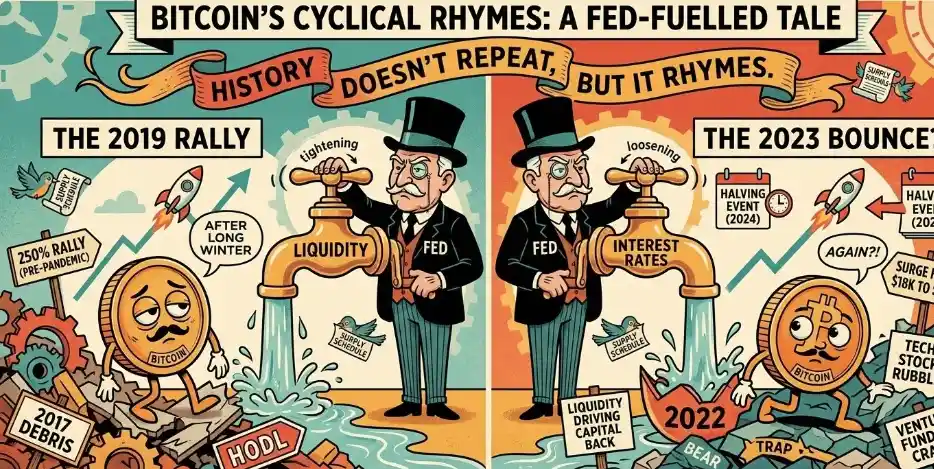
The halving in May gave the network one of its recurring narrative anchors. Every four years the issuance rate drops, reducing the pace at which new coins enter circulation. Halvings are not magical, despite how crypto likes to romanticize them, but they do matter because they tighten the relationship between supply discipline and market demand. In 2020 that mechanism landed in an environment already flooded with monetary stimulus from central banks. Suddenly Bitcoin’s programmed scarcity looked less like a niche talking point and more like a macro thesis.
Then came the institutional wave. MicroStrategy began buying Bitcoin for its treasury. Square followed. PayPal announced support for crypto services. Each of those moments mattered not because they made Bitcoin legitimate in some abstract moral sense, but because they expanded the range of people forced to pay attention. When listed companies and major payment platforms start treating an asset seriously, the conversation changes. Bitcoin was no longer only a retail obsession or a cypherpunk artifact. It had entered the room where corporate capital allocation and monetary anxiety were already having a very tense conversation.
By year’s end, Bitcoin looked less like a speculative sideshow and more like an asset class that had survived enough ridicule to become impossible to ignore. That was the real electricity of 2020. Not just the price, but the shift in narrative gravity. Bitcoin had spent years being dismissed as too volatile, too marginal, too unserious. Then the world broke, central banks flooded the system, and the weird internet money started looking unnervingly relevant.